
This article analyzes a form of online domination that can be identified as the verbal practice of gender domination centered on the body of those women that contribute, with their writings and their activism, to the life of the web, especially in those situations in which they attempt to build an intellectual and professional authority. The essay explores gender domination in the real-virtual universe while acknowledging the transnational perspective between Italy and the Anglo-Saxon world, as well as the historic development of Italian women’s rights. In particular, the authors highlight the strong ties between feminism at the end of the nineteenth century, which contributed to the creation of new intellectual spaces for Western Women; the practice of “autocoscienza” (or self awareness) of the 1970s, that created new types of communities for women; and feminist activism in the third millennium, which helped solidify the position of woman as public intellectual. Over the course of their reflection, the authors investigate how women of the third millennium are reacting to these forms of sexism. [Open source, free download at link above. Written in Italian.]
“Characters in Search, Authors Nearby: Sketches for Probationary Theater.” PSA, the journal for the Pirandello Society of America, vol. 38 (2026): 69-93.
From Lisa Sarti and Michael Subialka’s introduction to the issue: Guzzetta compares Pirandello’s Six Characters in Search of an Author and Right You Are! (If You Think So) with Giuliana Musso’s Dentro (Inside). A True Story, If You Think So to explore how theater grapples with truth, identity, and violence across different historical moments. She argues that, despite differences in style and context, all three plays examine the instability of truth—whether it is unknowable, constructed, or unspeakable—and reveal how societal structures and systems of power contribute to personal and collective trauma. Here, Guzzetta introduces the idea of “probationary theater,” where performance becomes a space for experimentation and inquiry rather than definitive answers, suggesting a methodological similarity in the way both Pirandello and Musso use theater to confront complex social and philosophical problems, especially during periods of political unrest and crisis.
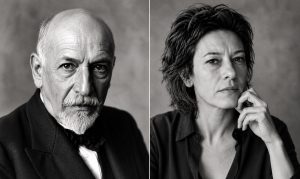
With Ombretta Frau “Female Sovereignty: Disorienting Feminist Rhetoric in the Italian Far Right.” Public Humanities 2 (2026). doi.org/10.1017/pub.2026.10157
In this essay, we continue our cultural-political analyses of right-wing women in positions of power, and how they manipulate feminism to their political advantage. Stemming from our previous study on Meloni’s particular brand of conservative feminism, we analyze the disorienting ability of the right to appropriate and manipulate the traditional language of the left. We are interested in this creation of confusion through rhetorical somersaults on the Italian political stage to further neoliberal economics, neoconservative morals, and a nationalist agenda that is hostile to women, nonwhite people, migrants, and LGBTQIA+ communities. As a case study, we offer an analysis of the ideas of one of Italy’s most prominent gender-critical feminists, Marina Terragni, who challenges assumptions about feminism’s ties to the left. Promoting a strictly binary vision, Terragni highlights the fault lines in the relationship between traditional and progressive feminism. [Open access article, fully available for free.]
With Ombretta Frau. “Donne di destra / Women of the Right.” gender/sexuality/italy, vol. 10. 1, 2 (2024), https://www.gendersexualityitaly.com/donne-di-destra-women-of-the-right/.
As Guest Editors of the entire issue on the theme of conservative feminism for the journal gender/sexuality/italy, we offer our own analysis using a feminist lens to introduce and deconstruct the idea of “Donne di destra” or “Women of the Right” in the sociopolitical and cultural context of contemporary Italy. [Open access article, fully available for free.]

“In Search of a Human/e Logic: An Introduction to Giuliana Musso’s Dentro (Inside);” Dentro (Inside). A true story, if you think so [translation of Giuliana Musso’s full-length play Dentro. Una storia vera, se volete]; “Conclusion: Translation Reflections.” Delos: A Journal of Translation and World Literature. University of Florida Press, vol. 38.2 (2024): 121-164.
*** WINNER OF THE 2025 AMERICAN SOCIETY FOR THEATRE RESEARCH TRANSLATION PRIZE ***
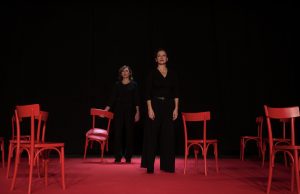
“Epistemologie incarnate: La drammaturgia somatica di Giuliana Musso in Mio eroe.” Italica. University of Illinois Press, vol. 100.3 (2023): 445-457.
From Sara Delmedico and Manuela Di Franco’s introduction to the issue:
Guzzetta’s “article poses an important question: what can personal and individual experience tell us about our society? Guzzetta takes Musso’s attention to women’s experiences as mothers of fallen soldiers to address the impact of political discourse and detachment on the life of the individual. Guzzetta reflects on how theater as a medium can create a collective response and provide a holistic interpretation of the war and our physical response to the emotions it provokes.”
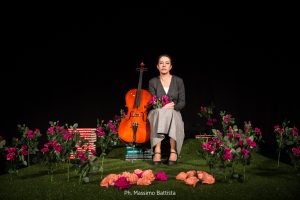
“The Lasting Influence of Dario Fo and Franca Rame.” Theatre History Studies. University of Alabama Press, Vol. 36 (2018): 257-277.
From Brian E. G. Cook’s introduction to the special section on “rousing theatre:”
Juliet Guzzetta’s article explores the way that theatre participates in political dialogues by connecting the work of Dario Fo and Franca Rame with the recent Theatre of Narration (ToN) performance genre in Italy. The self-created and self-performed teatro di narrazione performers “re-visit historical events of national importance from local perspectives . . . [and] demonstrate the ways in which ordinary people have major influences on the legacies of the past,” which links them to Fo and Rame (and echoes the solo presentation format of works by Mroué and Raad). Guzzetta is careful to also articulate the differences, including Fo’s facility at physical performance, something most of the ToN writers do not emulate. She recounts several of Fo and Rame’s most remarkable productions, including Accidental Death of an Anarchist (1970) and Rame’s The Rape (1983) alongside examples of ToN, including the work of Laura Curino, which directly addresses Curino’s inheritance from her predecessors. Curino “discusses the couple at the end of her play Passione and then quotes one of Rame’s scenes from Mistero buffo by performing a large portion of it,” and in so doing, Guzzetta reflects that Curino is also reclaiming Rame’s contribution to Fo’s legacy. While both Fo/Rame and ToN performances focus on politics, “the major difference is that Fo and Rame . . . invoked current events largely in order to strengthen an argument about contemporary politics, whereas the narrators contemplate the historicity of a particular event in order to understand the present more dynamically.” This does not lessen the ToN productions’ efficacy, but it does make it less definite.”
With Ombretta Frau. “’Il blog è mio e lo gestisco io:’ Dominio di genere nel web italiano” (My Body, My Blog: Gender Domination on the Web in Italy). gender/sexuality/italy Vol. 2 (2015): 75-90, http://www.gendersexualityitaly.com/il-blog-e-mio-e-lo-gestisco-io-dominio-di-genere-nel-web-italiano/.

“At Work, at Home: Women, Labor, and Laura Curino’s Olivetti Plays.” Annali d’Italianistica. Special Issue “From Otium and Occupatio to Work and Labor in Italian Culture.” Vol. 32 (2014): 291-306.
From the introduction by Norma Bouchard and Valerio Ferme: Juliet Guzzetta’s “At Work, at Home: Women, Labor, and Laura Curino ‘s Olivetti Plays,” brings us back to the Utopian project of a pro-worker, benevolent and more humane factory that was established in Ivrea by the Olivettis. Guzzetta discusses the experimental teatro di narrazione of Laura Curino, especially her 1990s plays Camillo Olivetti: alle radici di un sogno and Adriano Olivetti: il sogno possibile. Although these plays ostensibly describe the openness of the Olivettis toward new, forward-looking practices of industrial labor, the author illustrates that the pieces do not focus on the Olivetti men, but on Elvira Sacerdoti, the mother of Camillo, and Luisa Revel, Camillo’s wife and Adriano’s mother. In doing so, Curino voices one of the central concerns of Lotta Femminista: women’s wage-less labor of reproduction as the extraction of a (free) surplus value that is central to capitalist accumulation.
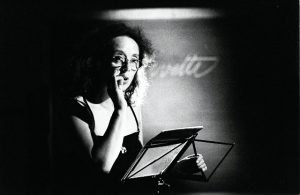
“Oratory and the Public Sphere: Hearing Italy through Narrative Theater.” Spazio filosofico 2 (Summer 2011): http://www.spaziofilosofico.it/en/numero_02/1139/oratory-and-the-public-sphere/.

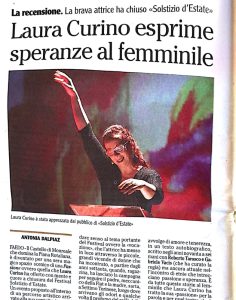
“A Presentation of Herself: Laura Curino’s Passions in Everyday Life.” Spunti e ricerche. Special Issue on Studies in Modern Italian Theatre, vol. 25 (2010): 116-130.
From Annamaria Pagliaro’s introduction to the issue:
“Juliet Guzzetta’s article focuses on Laura Curino, actor, playwright and committed exponent of teatro di narrazione. With Gabriele Vacis and others she founded the theatre company Laboratorio Teatro Settimo [outside of Turin]. She travelled through Italy and Europe, performing her texts. Passione is Curino’s first solo performance as the narrator, enacting different characters and herself at different stages of life. […] Guzzetta offers an interpretation inspired by Michel Foucault’s notions of historiography and Erving Goffman’s concepts of dramaturgical sociology. Guzzetta reflects on the subversive ways in which Curino narrates history from the perspective of the everyday, ordinary woman, trying to reclaim a female voice in history. At the same time she engages in a discussion on the potential of narrative theatre, its dialogic relationship with the audience and the continuously evolving stories within narration.”
 Skip to content